Understand AI from both ethical and practical perspectives, including the specific craft of prompt engineering.
Read more
Crafting Microsoft Copilot to Unlock Learning Potential


Earlier this year, Whitgift School invited TA Education to deliver a series of interactive workshops for students in Years 9 and 10, designed to support their use of Microsoft Copilot in the classroom.
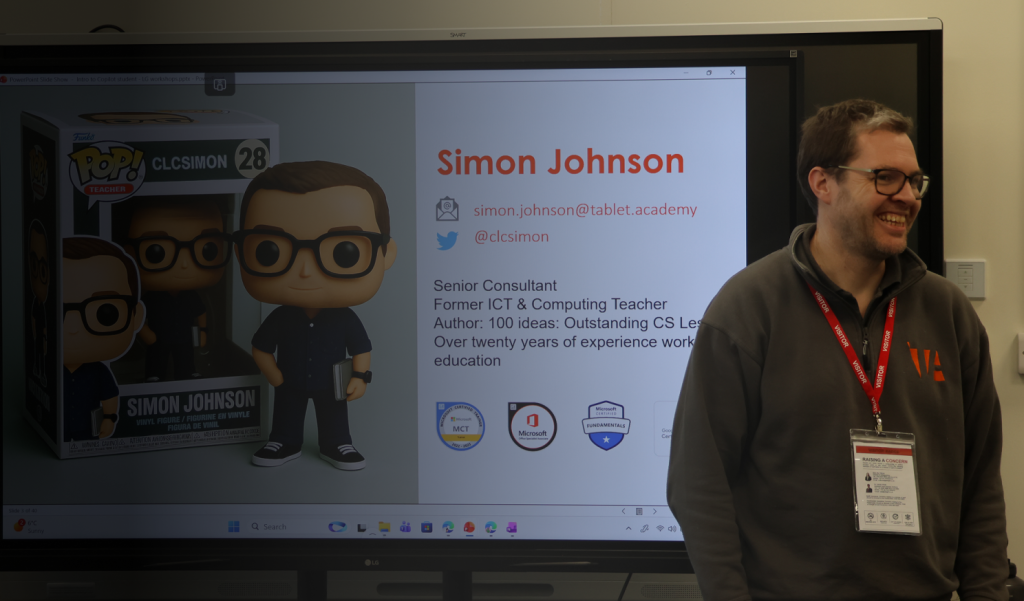
These sessions were split across four subject areas and engaged both students and participating teachers. The ambition was to centre on the need for students to understand how to use AI ethically and effectively. With this in mind, Simon Johnson, one of TA educations leading AI consultants, designed lessons aligned with the learning outcomes of participating students and delivered sessions across four subject areas.
With increasing interest in the potential of AI across education, Whitgift School felt it was important to ensure that both staff and students develop a confident and critical understanding of Generative AI tools such as Microsoft Copilot.
The priority was not just to provide access to AI tools, but also to provide guidance to users on how to use it safely and effectively within the context of learning.The goal behind the sessions was to instil in participants the intentional use of AI across the school.
This approach helped students understand that AI should enhance thinking rather than replace it, and underpinning this was the overarching ethos that in all activities was the key theme of recognising the importance of using AI ethically and with clear, focussed intent.
This meant that rather than relying on AI to “do the work,” students instead explored how it can support them with their work, regardless of whether the assistance was with content, creativity, or analysis. The sessions also reinforced how to avoid superficial or “AI gimmick” usage, focusing instead on learning outcomes and enrichment.
One activity which stood out involved GCSE English Literature students working with Vernon Scannell’s poem `Hide and Seek´, where students used evidence-based prompting in Microsoft Copilot to generate mood-driven images that reflected textual themes and interpretations.
This activity required students to translate literary understanding into precise visual prompts, strengthening both comprehension and analytical skills.
A teacher involved in the session noted:
This highlights how AI, when used thoughtfully, can deepen and encourage renewed curiosity.
The workshops also provided a valuable opportunity for teachers to observe student interactions with Copilot in real time, building an understanding of how different prompting strategies supported the learners.
This dual experience of students exploring AI capabilities while teachers observe and reflect has helped inform Whitgift’s broader approach to integrating Copilot into teaching practice across the school.
In the past, interacting with computers required learning rigid coding languages. Today, generative AI uses natural human language, meaning the quality of the machine's output is directly tied to the quality of the user's input. This requires
Equipping students with the technical skills to use AI without teaching them the ethical guardrails is highly dangerous. Secondary school is the exact developmental window where critical thinking and scepticism must be sharpened.
The technical and ethical perspectives converge beautifully within the act of prompting itself. When young people know how to write advanced prompts, they can actually use their technical skills to mitigate ethical risks:
AI is a technology that creates an event horizon beyond which there is no turning back. It is imperative that our young people are ready for the future they are about to inherit and exploit, and it is the role of education to prepare them for this brave new world.
Understanding AI from both ethical and practical perspectives, including the specific craft of prompt engineering is rapidly becoming as foundational for secondary school students as literacy and basic mathematics.
Want to read more like this? check out our other blogs, up follow us on Linkedin at TA Talk.
Copilot+ PCs intelligently distribute workloads between the available hardware on the device and Microsoft’s cloud servers to leverage the most powerful AI models.
As of August 10th 2026, Gemini in Google Classroom is now available for students of all ages.

Explore how Microsoft Copilot can help teachers spend less time writing reports and more time focusing on pupils.